
Match the application, jacket and lining, pressure, dimensions and couplings before comparing quotations from a fire hose supplier.
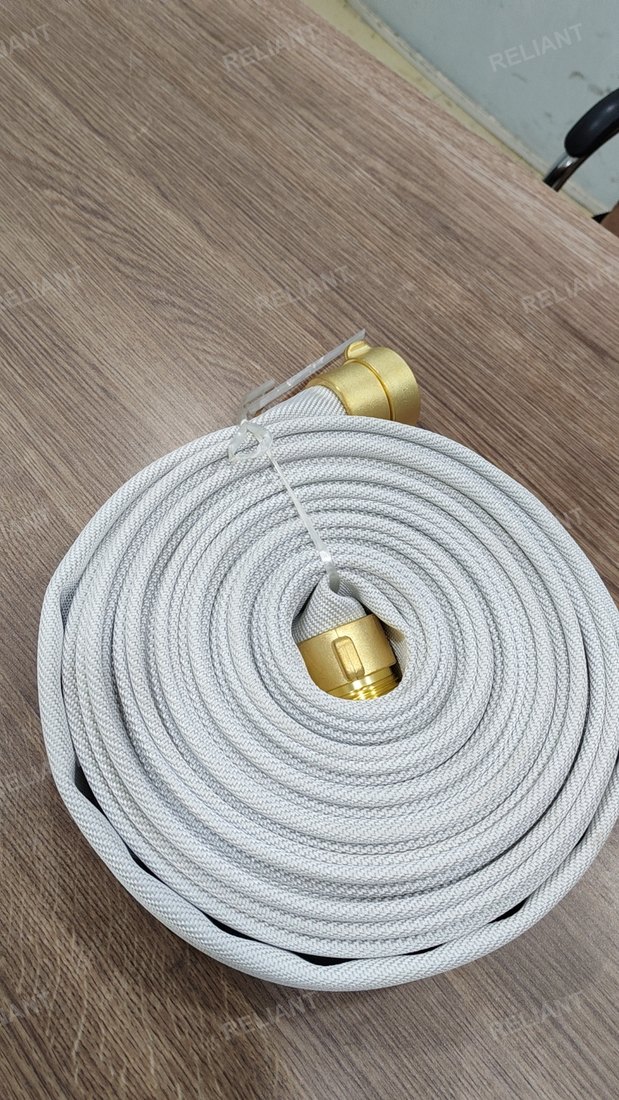
Start with the application
To choose a fire hose, define the intended water-delivery task first. Then confirm the construction, pressure requirements, diameter, length, coupling details and documents for one specific configuration. A product category or a photograph alone is not a complete purchasing specification. Importers and distributors should ask buyers where the hose will operate, what equipment it connects to and which local project requirements apply.
Specify the jacket and lining together
Single jacket fire hose and double jacket fire hose describe construction choices, not a universal quality ranking. Compare the actual model, jacket material, lining and handling requirements. Reliant Fire manufactures woven hose with PVC, TPU, synthetic rubber, EPDM, NBR and PE material options, subject to model confirmation. Buyers should state relevant operating conditions rather than infer abrasion, temperature or chemical performance from a material name. Ask for the applicable product data before approving the configuration.
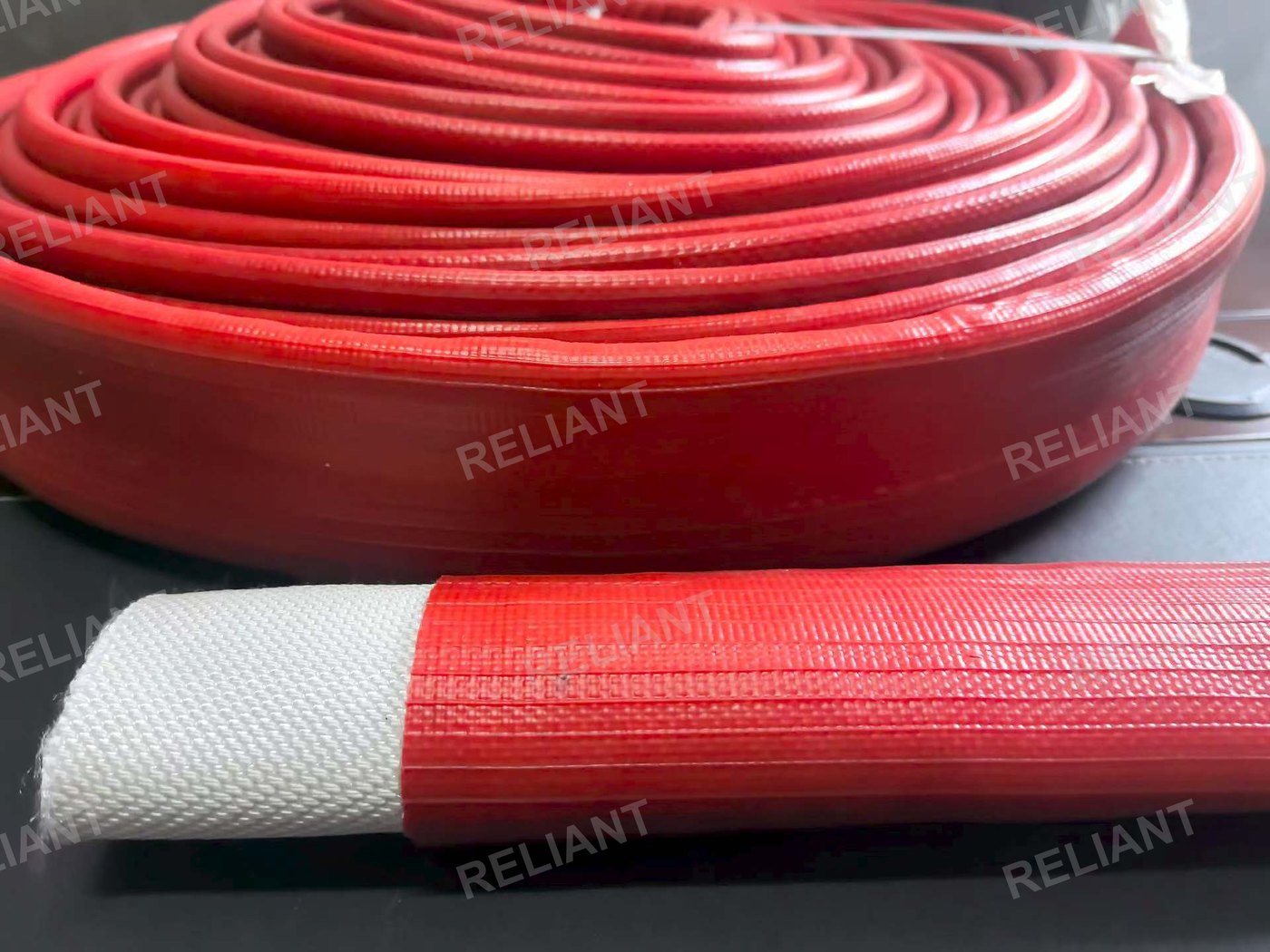
Keep pressure requirements unambiguous
List working pressure, required test information and burst-pressure requirements separately in the inquiry. These values answer different questions and should not be substituted for each other. Tie every figure to its unit, exact model and applicable test method. Reliant Fire’s stated working-pressure range is approximately 4–25 bar across its hose offering; this range does not establish that every diameter and construction is available at every pressure. Confirm the complete combination in writing.
Match diameter and length to the system
Nominal diameter must be checked against the connected pump, valve, nozzle and coupling. Length also affects handling and the water-delivery arrangement. Fire-service guidance explains that friction loss varies with flow, hose size and hose length. A procurement guide cannot set the hydraulic design for a particular installation: provide the intended duty and have the responsible system professional confirm performance. For supply planning, Reliant Fire offers 15, 20, 25, 30 and 35 metre lengths, with final model combinations confirmed before production.
Verify the complete coupling connection
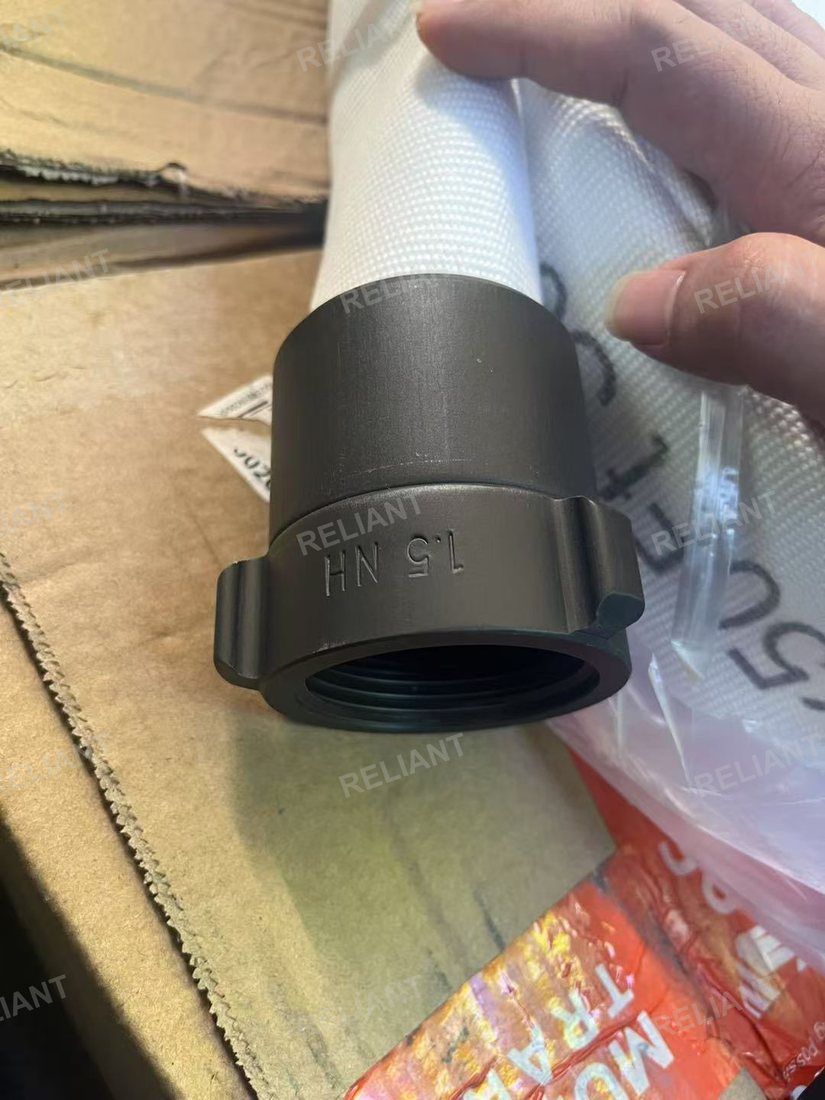
A coupling name and hose diameter are only the beginning. For Storz couplings, verify the connection dimensions, hose attachment, gasket and mating equipment. For threaded connections, include the exact thread specification and mating arrangement. Reliant Fire can provide Storz, BS, NH/NST, GOST, Machino and Nakajima options, with compatibility checked for the order. Do not assume that two components fit because both are described as “2 inch”. Send dimensioned drawings or clear photographs when the existing system is uncertain.
Compare quotations for the same configuration
A useful fire hose supplier quotation identifies the material, construction, nominal diameter, finished length, working and burst-pressure requirements, couplings, quantity, marking, packaging and delivery terms. Add the destination and any required documents. Review documents against their holder, issuer, validity, covered model and market scope when they are required. Certification cannot be inferred from a logo or extended automatically to another configuration. For distributor programs, approve the sample, marking and packing specification before the larger order.
Purchasing checklist
| Item | Confirm before ordering |
|---|---|
| Product | Construction, lining, diameter and length |
| Performance | Pressure terminology, model-specific data and required documents |
| Connection | Coupling dimensions, gasket and mating equipment |
| Order | Quantity, marking, packaging and delivery terms |
Frequently asked questions
What should I confirm first when choosing a fire hose?
Start with the application and connected equipment, then specify construction, pressure, size, length and couplings for that duty.
Is double jacket fire hose always the better choice?
No. Compare the exact model and operating requirements; jacket count alone does not establish suitability.
Does a 2 inch hose fit any 2 inch Storz coupling?
No. Confirm the hose attachment dimensions, coupling connection, gasket and mating equipment before ordering.
Can working pressure replace burst pressure in an inquiry?
No. State each requirement separately with its unit and the applicable model and test information.
Can Reliant Fire customize hose for distributors?
Yes. Colour, marking, length and packaging options can be discussed; confirm the manufacturable combination and order details before production.
What should I send to request a fire hose quotation?
Send materials, length, diameter, pressure requirements, quantity, coupling needs, destination, delivery terms and quotation currency.
Fire Engineering: Firefighting Fundamentals: Fire Hose. Prepared for procurement readers. Reviewed 2026-10-29. Photographs show individual products; visible markings do not specify the whole range.
← All news